

QAM Hub vs Qase: Test Management Compared (2026)
QAM Hub runs autonomous AI flows on Chromium, Firefox and WebKit, gives every paid seat a free viewer seat, and stops metering AI entirely if you bring your own key. Qase meters at $0.40 per credit.
Facts verified on 27 August 2026
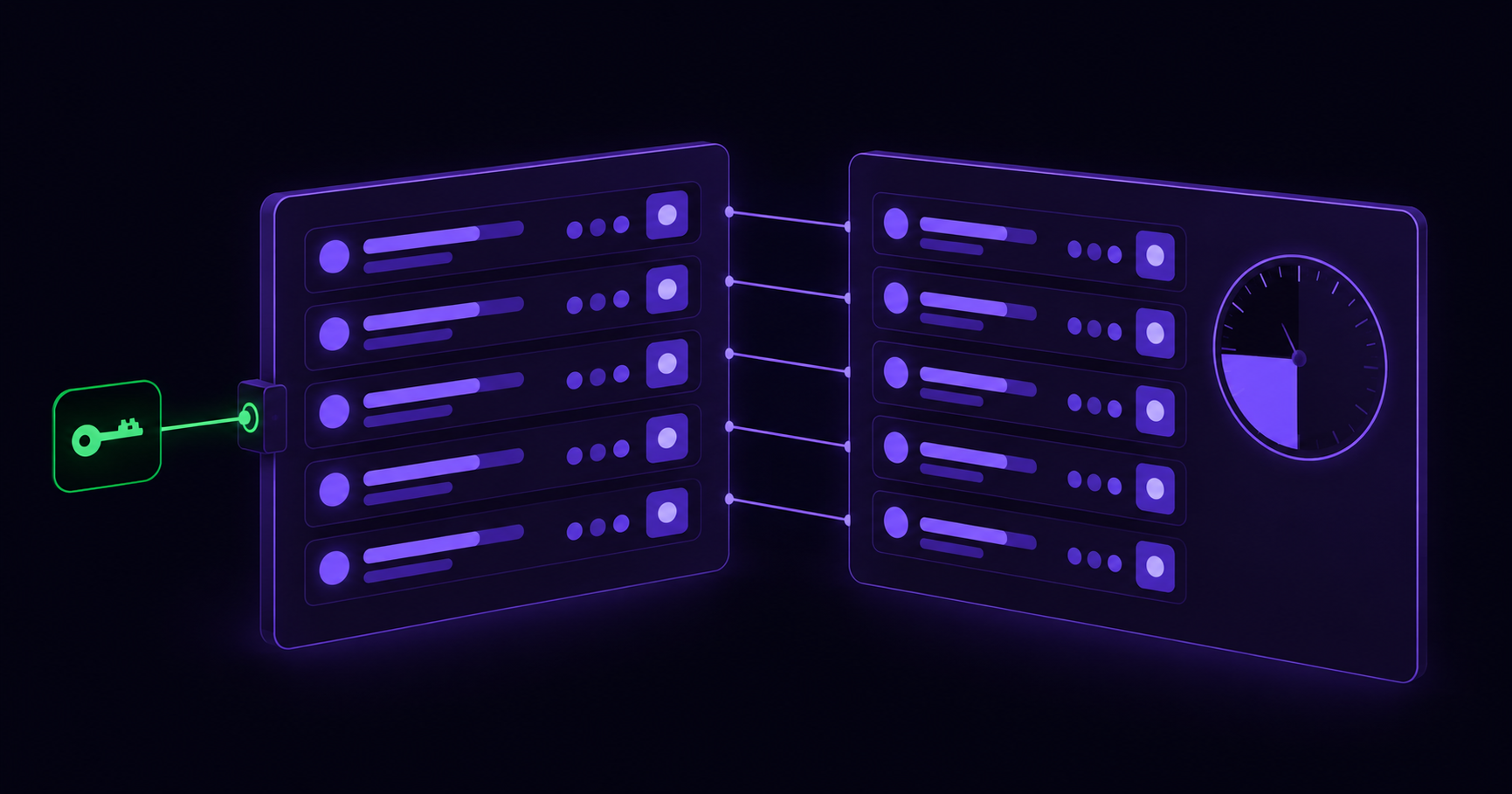
QAM Hub and Qase are both standalone cloud test management systems that hold manual cases and automated results in one record, and four things separate them in 2026. QAM Hub lets you connect your own AI key, after which platform AI stops consuming credits at all; Qase runs AI on its own OpenAI-backed infrastructure and meters it at $0.40 per credit over the monthly allowance (qase.io/pricing, verified 27 August 2026). QAM Hub gives every paid seat one free read-only viewer seat, so stakeholders cost nothing until they outnumber your testers; Qase bills collaborator seats at $10 per user per month. QAM Hub runs autonomous Agent Flows against Chromium, Firefox and WebKit with device profiles and custom viewports, proposes a corrected expected result when it detects a legitimate UI change, and waits for a human to accept it. And QAM Hub scores every automated test for flakiness and stability across a 7 to 90 day window, where Qase reports pass and fail without a per-case stability metric. Qase remains the better answer for teams of four or fewer who fit inside its free plan, and it carries review volume we do not have yet.
The takeaway in 30 seconds#
- Both meter AI. Only QAM Hub lets you stop the meter. Each QAM Hub plan bundles AI credits per seat with a live workspace meter, and a workspace using its own AI key is never metered. Qase includes 2,000 credits a month on Teams and 4,000 on Enterprise, with no rollover and $0.40 per credit after that, and its published plan comparison lists no bring-your-own-key option.
- Read-only stakeholders: one free viewer per paid seat on QAM Hub, against $10 per user per month for a Qase collaborator seat.
- Autonomous AI test execution is shipped on both, built differently. QAM Hub Agent Flows run through a local runner (
npx @qamadness/tms-runner start) across three browser engines and mobile viewports. Qase executes on its own cloud infrastructure and exports code to Playwright, Cypress or Selenium. - QAM Hub is stronger on the automation record. Per-test flakiness scoring, stability trends, quarantine and cross-run regression detection, plus traces, video and screenshots on the result.
- Qase restructured its plans in June 2026. Startup was retired, Business became Teams at $35 per user per month annually, and the free plan rose to four users. Most comparison articles still quote the dead $20 and $30 tiers.
- Qase carries the review volume. 4.7 out of 5 from 309 reviews on G2, page updated 26 August 2026. QAM Hub launched self-service in August 2026 and has none.
- Choose QAM Hub for a mixed manual and automated suite that needs checklists, custom workflow states, cross-browser autonomous runs and predictable AI cost. Choose Qase if you are four people or fewer on its free plan, or you want AI tests generated and executed without a runner in your own environment.
QAM Hub vs Qase: the full comparison#
Facts verified on 27 August 2026 against each vendor's own pricing and product pages, plus G2 and Capterra. Qase figures come from qase.io, never from a search snippet, because third-party directories are three months behind on this product. QAM Hub figures come from the shipped product as of release 1.13.
| QAM Hub | Qase | |
|---|---|---|
| Product type | Standalone cloud TMS, manual, automated and autonomous AI runs in one record | Standalone cloud TMS, manual and automated in one record |
| Plans (verified 27 Aug 2026) | Standard and Advanced, per seat, EUR or USD, monthly or yearly, published on the pricing page. Self-service trial, no sales call | Free plan; Teams $35/user/month annually or $42 monthly; Enterprise by quote. 14-day trial on Teams |
| Free tier | None. Trial only | Yes, up to four users, permanently |
| What the price is billed on | Named user, seats reserved by the organisation owner and synced to the subscription | Named user, five-seat minimum on Teams |
| Cost of read-only stakeholders | One free Viewer seat per paid seat. An org-level Viewer can never hold write access on any project | Collaborator seats at $10/user/month as an add-on. They do not consume full seats |
| How AI is billed | AI credits bundled per seat with each plan, live workspace meter and a full transaction ledger. A workspace using its own AI key consumes no credits | Credit-metered. 2,000/month on Teams, 4,000 on Enterprise, none on Free, no rollover, $0.40 per extra credit. No bring-your-own-key option in the published plan comparison |
| AI capabilities | Test case and checklist generation, AI bug analysis, AI fix test, AI retrospectives, Quality Analyzer v2 with an A to D score and duplicate detection, autonomous Agent Flows, in-app AI assistant | Test case generation from requirements in Jira, GitHub or Qase, manual-to-automated conversion, automation-readiness grading, plain-language failure explanation, Agentic Mode on Teams and Enterprise |
| Autonomous AI execution | Agent Flows on Chromium, Firefox and WebKit with device profiles and custom viewports, run by a local runner. Cron scheduling, encrypted credentials, preconditions and postconditions, baselines, step-level traces | Agentic Mode running on Qase-managed cloud infrastructure, with a screencast per run and code export to Playwright, Cypress or Selenium |
| Self-healing test cases | When AI detects a legitimate UI change it proposes an updated expected result, shows current against proposed, and updates the case only after a human accepts | Self-healing adjusts to small selector and UI changes on tests running in the AI test cloud |
| Automation ingest | Official Playwright and Cypress npm reporters, plus a generic XML reporter for any framework that emits XML | Reporters for Playwright, Cypress, Selenium and others, plus REST API and CLI. Unlimited API-submitted results on Teams, 5k/month on Free |
| Flaky detection and stability trend | Per-test stability score, flakiness rate, average duration and trends across a 7 to 90 day window, plus quarantine and cross-run regression detection | Not offered as a per-case stability metric at the time of writing |
| Checklists | First-class column-based checklist suites with keyboard-driven execution and tagged checklist runs | Not a separate object type |
| Two-way tracker integrations | Jira, GitHub Issues, GitLab, Asana, Linear, Redmine, Trello. Opt-in one-way publishing of coverage and bug provenance onto Jira issues | 35+ integrations advertised on Teams and Enterprise, none on Free |
| Custom statuses and field types | Custom statuses, custom fields and custom field types, up to 20 custom fields per project, with presets | Custom fields on paid plans. Status and transition customisation is the ceiling reviewers most often name |
| Portfolio reporting | Projects Health matrix across all projects with admin-editable Critical, Warning and Healthy rules, plus pass-rate trend, test base growth, case freshness and milestone burndown widgets | Dashboards and reports with drag-and-drop widgets and Qase Query Language, on paid plans |
| Migration path in | CSV import for cases, XML for automation results, and a TestRail import wizard covering suites, sections, cases, custom fields and runs | CSV and API import; assisted migration services are an Enterprise add-on |
AI billing is where the two products actually diverge#
Both products meter AI, and any comparison that says otherwise is selling something. The question is what the meter is attached to and whether you can switch it off.
Qase grants credits monthly against the plan: 2,000 on Teams, 4,000 on Enterprise, none on Free. Credits are consumed by test case generation, manual-to-automated conversion and execution in the AI test cloud. They reset every month and do not roll over, and extra credits cost $0.40 each. The pricing page does not publish how many credits a single generation or conversion burns, so a team cannot forecast its own consumption before committing, and there is no published option to point the platform at your own OpenAI or Anthropic account.
QAM Hub bundles AI credits per seat into both plans, shows a live workspace meter and keeps a transaction ledger, so a QA lead can see which feature and which person consumed what. The part that changes the arithmetic is the key: a workspace running on its own AI key is not metered at all. You pay your model provider directly at their rate, and the platform charges you nothing for AI on top. For a team already holding an enterprise OpenAI or Anthropic contract, this converts an unpredictable per-credit line into an existing one they already control.
Run the numbers on a heavy month at Qase. A ten-person team on Teams pays $350 in seats. A release push that burns 3,000 credits instead of 2,000 adds 1,000 × $0.40, which is $400. The AI bill exceeds the seat bill and it arrives after the work is done. That is not hidden, since Qase states it on the pricing page, but it is a variable cost stacked on a fixed one and it changes behaviour. People ration metered features, and a generation tool people ration stops being part of the workflow.
The honest version of our own side: on platform-provided AI, we meter too, and a team that burns through its bundled credits will feel the same pressure. The difference is that we give you a way out of the meter and Qase, as published, does not.
Autonomous runs: two different bets#
Both vendors now ship autonomous AI test execution, and the architectural choice underneath is the thing to compare.
Qase executes on infrastructure it owns. You do not install anything, there is a screencast of every run, and you can export the generated code to Playwright, Cypress or Selenium in Python, JavaScript or TypeScript when you want to take it in-house. For a team with no automation engineer and no CI capacity, that removes a genuine barrier.
QAM Hub Agent Flows run through a runner you start with a single command, npx @qamadness/tms-runner start, while all AI reasoning happens server-side, so nobody on the team needs to hold model keys or understand the inference layer. The runner is what unlocks the parts a hosted-only model struggles with: flows execute against Chromium, Firefox or WebKit, with device profiles and custom viewports, so cross-browser and mobile autonomous runs are the same feature rather than a separate product. Tests reach environments behind your own network. Credentials are encrypted, flows carry preconditions and postconditions, runs are cron-scheduled, and every run leaves step-level traces, screenshots and a JSON export.
The review loop is where we would defend our design hardest. After a run, the Case Results tab gives a per-test-case verdict across every flow, filterable by status, flow, review state and linked issue. A finding can be confirmed as a bug, which opens the issue dialog against Jira, GitHub, GitLab or Linear and links the created issue to both the case and the run. Or it can be accepted as a legitimate product change, in which case the AI proposes an updated expected result, shows current against proposed side by side, and updates the test case once a human agrees, which stops the same finding reappearing on every subsequent run. Each project also carries a knowledge base of uploaded product context, and after each run the AI proposes updates to it that a person accepts or rejects.
Self-healing that a human approves and that writes back into the test case record is a different thing from self-healing that silently patches a selector. We wrote about why the human-in-the-loop shape matters in autonomous regression testing with AI agents.
[Screenshot placeholder: qam-hub-ai-flows-case-results.webp · alt: "Case Results tab showing per-test-case verdicts across several Agent Flows with review states and linked issues" · caption: One screen for what actually broke, across every flow]
Seat structure and what a team actually pays#
Take ten people who write and run tests plus fifteen developers, product managers and support leads who only read results. On Qase Teams billed annually that is 10 × $35, or $350 a month, plus fifteen collaborator seats at $10, or $150 a month. Roughly $6,000 a year before any AI overage. On monthly billing the writer seats alone go to $420 a month.
On QAM Hub, ten paid seats carry ten free Viewer seats. Five of those fifteen stakeholders would need paid seats or would wait for someone to share a report. State that limit plainly rather than claiming viewers are unlimited: the ratio is one free viewer per paid seat. In most QA organisations readers outnumber writers by two or three to one at the extreme, and by roughly one to one in practice, which is the ratio the entitlement was built around.
Both products publish their prices on a public pricing page with currency and billing-interval toggles, which is more than most of this category does. Our page reads its figures live from the product, so it cannot advertise a number the platform would not charge.
Where Qase wins#
Independent evidence. Qase holds 4.7 out of 5 across 309 reviews on G2 as of 26 August 2026, and 4.8 across 16 reviews on Capterra. The G2 figure is the one that carries weight, because 309 reviews is a real sample. QAM Hub opened self-service signup in August 2026 and has no third-party rating at all, and pretending otherwise would be worthless to you.
The free plan. Four seats, real test case management, test runs, defect management, API access and an MCP server, permanently, without a card. For a two-person team or a freelancer that is a complete tool rather than a demo. QAM Hub has a self-service trial and no free tier, so under five people Qase is cheaper by the amount of the invoice.
Zero-install autonomous runs. Agentic Mode executes on Qase's own infrastructure. If nobody on the team is willing to run a process or wire a CI job, that is a real advantage over a runner-based design.
The integration catalogue. 35 or more integrations on paid plans against our seven two-way tracker integrations. Ours go deeper on the trackers they cover, and breadth still counts if your toolchain is unusual.
MCP on every plan. Qase ships an MCP server on all tiers including Free, with a hosted version on Enterprise. Ours is available to QAM Hub users on request.
Where QAM Hub wins#
The automation record, not the automation count#
Most test management systems treat an automated run as a stack of pass and fail rows. QAM Hub treats each automated test as an object with a history. Test Explorer holds pass rate, stability score, flakiness rate and average duration per test, trended across a window between 7 and 90 days. Cross-run intelligence surfaces regressions where a test passed last run and fails now, chronic failures, top failing tests and per-run flakiness, and admins can quarantine a flaky test so it stops poisoning release-readiness reporting while somebody fixes it.
The Playwright and Cypress reporters push traces, video and screenshots with the result, so whoever triages a failure at 6pm on a Thursday is not asked to reproduce it locally first. Anything that emits XML reports through the generic reporter, which matters more than it sounds: teams accumulate frameworks, and a TMS that supports exactly two of them turns the third into a spreadsheet. Automated tests link back to manual cases through a TC-<number> prefix in the title, so one automated test can cover several manual cases and coverage reporting stays honest.
[Screenshot placeholder: qam-hub-test-explorer-stability-trend.webp · alt: "Test Explorer showing stability score, flakiness rate and duration trend for an automated test over 30 days" · caption: Per-test stability and flakiness, trended over a chosen window]
One screen for a portfolio of projects#
Projects Health puts every project in the organisation into a Critical, Warning or Healthy matrix built from recent pass rate, active runs, open linked issues, automation coverage, the next milestone and last activity. The thresholds behind the colours are organisation-wide and editable by admins, with a plain-English legend, so red means the same thing to a QA lead and to a CTO. Alongside it sit pass-rate trend, test base growth, test case freshness (never executed, or stale beyond 90 days) and an active milestone burndown with an on-track, at-risk or overdue forecast.
Qase reports well inside a project. The cross-project view for someone accountable for eight products at once is the gap reviewers name, and it is the reason this section exists.
Checklists as a real object#
Column-based checklist suites are a first-class object, separate from test cases, with keyboard-driven execution and their own run tags. Release readiness, smoke passes before a deploy, exploratory charters and device sweeps fit the checklist shape rather than the test case shape, and forcing them into a case repository is how repositories fill with 40 one-line cases nobody maintains. Most of the category has no equivalent, Qase included.
[Screenshot placeholder: qam-hub-release-readiness-checklist.webp · alt: "A column-based release readiness checklist in QAM Hub with per-column completion" · caption: Checklists live alongside test cases, not inside them]
Workflow you define#
Custom statuses, custom fields and custom field types, with up to 20 custom fields per project and presets to set them up quickly. The workflow ceiling is the friction reviewers most often name about Qase: teams with a defined lifecycle, a review gate or a controlled set of transitions end up adapting their process to the tool. If your statuses are pass, fail, blocked, skip and untested, this is not an argument. If your regulated process needs a state between executed and accepted, it is the whole argument.
Quality Analyzer v2#
Background AI analysis of the whole test base against run history, producing a deterministic A to D quality score, duplicate detection, evidence quotes per finding, triage states of open, fixed or dismissed, a team-shared map of what has already been analysed and a delta against the previous run. PDF export drops dismissed findings. The method behind it is in finding duplicate and low-quality test cases.
Where QAM Hub is the weaker choice#
Four things, stated plainly. There is no free tier, so a two-person team that fits inside Qase's free plan pays us and pays Qase nothing. QAM Hub is newer, so the community, third-party tutorials and Stack Overflow answers that come with a decade-old product do not exist yet, and there is no G2 or Capterra record to check us against. It integrates with Jira but is not Jira-native, so if you want test cases to be Jira issues, look at Xray or Zephyr Scale rather than either product on this page. And Agent Flows need a runner process somewhere, which is trivial for a team with CI and a genuine obstacle for a team without one.
Migrating from Qase to QAM Hub#
Effort estimate for a repository of a few thousand cases: half a day to a day for the export and import, plus a week of parallel running before the team switches. The mechanics are straightforward and the judgement calls are not. Note up front that the guided import wizard currently covers TestRail; a Qase migration runs through CSV and the API.
- Export cases from Qase as CSV, or pull them through the Qase API when you need custom fields and attachments preserved with more fidelity than CSV gives. Export per project rather than in one pass, so a mapping error affects one project instead of all of them.
- Decide what not to bring. A migration is the only moment anyone will agree to delete test cases. Run a duplicate and vague-case pass before the import rather than after, or you pay the cleanup cost twice. Quality Analyzer will score the base and flag duplicates once the data is in.
- Map custom fields and statuses first, import second. Build the target field types and custom statuses before the import runs, using the recommended-fields presets in project settings. Field mapping done during an import is field mapping done badly. Step-by-step in CSV import and export.
- Repoint the automation reporters. Swap the Qase reporter for the QAM Hub Playwright or Cypress reporter, or the generic XML reporter, and set
QAM_API_URL,QAM_PROJECT_IDandQAM_API_TOKENin CI. Keep both reporting for a week so you can compare totals rather than trust them. - Accept that history does not move. Result history is what every migration loses, from any tool to any tool, because results are tied to run objects with no portable format. Plan the cutover at a release boundary and keep the Qase account readable for a billing cycle.
The general version of this, including what breaks on the way out of a spreadsheet, is in migrating test cases from spreadsheets to a TMS.
Which one should you choose#
Choose QAM Hub if: you want AI cost you can cap by bringing your own key; your stakeholders roughly match your testers in number and you would rather not pay per reader; you need autonomous runs against Firefox, WebKit or a mobile viewport, or against an environment inside your own network; you are accountable for several projects at once and need one health view across them; release readiness in your team is a checklist rather than a test suite; or your process needs custom statuses and transitions.
Choose Qase if: your team is four or fewer and the free plan covers you; nobody is willing to run a runner process and you want autonomous tests executed entirely on the vendor's infrastructure; your toolchain needs an integration outside the seven trackers we support; you want a self-serve MCP server on any tier; or you weigh a large public review sample heavily in procurement.
Choose neither if: your tests should live as Jira issues, in which case Xray or Zephyr Scale is the honest answer, or you have fewer than about fifty cases and one tester, in which case a spreadsheet is still fine and we say so in QAM Hub vs spreadsheets.
Third-party ratings, dated and counted#
| Source | Qase | QAM Hub |
|---|---|---|
| G2 | 4.7 / 5 from 309 reviews (page updated 26 August 2026) | No listing; self-service launched August 2026 |
| Capterra | 4.8 / 5 from 16 reviews (listing updated 26 August 2026) | No listing; self-service launched August 2026 |
A 4.8 across 16 reviews and a 4.7 across 309 are not equivalent evidence, and most comparison pages print the number without the count. The count is what tells you whether the score means anything.
How this comparison was made#
Qase pricing, plan contents and AI capabilities were read from qase.io's own pricing and AI product pages on 27 August 2026 and cross-checked against Qase's June 2026 packaging announcement. Ratings and review counts were read from the G2 and Capterra product pages on the same date. Where a third-party review site disagreed with the vendor's own page, the vendor page was used and the discrepancy noted. Statements about what Qase does not offer are limited to what its published plan comparison shows, checked on that date. QAM Hub capabilities describe the shipped product as of release 1.13. This page does not link to competitor sites.
FAQ#
How much does Qase cost per user in 2026?#
Qase's Teams plan is $35 per user per month billed annually, or $42 billed monthly, with a five-seat minimum. Collaborator seats for people who only read results are $10 per user per month as an add-on. The free plan covers up to four users, and Enterprise is quoted individually. Verified against qase.io/pricing on 27 August 2026. Pages quoting a Startup plan at $20 or a Business plan at $30 describe tiers Qase retired in June 2026.
What happens when you run out of AI credits?#
On Qase, credits are granted monthly, do not roll over, and extra credits cost $0.40 each, with 2,000 included on Teams and 4,000 on Enterprise. Because Qase does not publish the credit cost of an individual generation or conversion, most teams discover their consumption rate after the first heavy month. QAM Hub also bundles AI credits per seat and shows a live meter with a full ledger, and a workspace connected to its own AI key consumes no platform credits at all, which is the route teams with an existing model contract usually take.
Can you use your own AI key instead of paying for credits?#
On QAM Hub, yes. Connect a workspace or project AI key and platform AI stops metering, so you pay your model provider directly and nothing extra to us. Qase's published plan comparison, checked on 27 August 2026, lists AI credits on Teams and Enterprise with per-credit overage and shows no bring-your-own-key option.
Is QAM Hub a good Qase alternative?#
For teams whose pain is AI cost predictability, the price of read-only stakeholders, cross-browser autonomous runs or cross-project visibility, yes. QAM Hub adds a free viewer seat per paid seat, bring-your-own-key AI, Agent Flows on three browser engines with human-approved self-healing, per-test flakiness analytics, first-class checklists and custom statuses. For a team of four or fewer inside Qase's free plan, Qase is cheaper and we would not argue with it. A wider set of options is in Qase alternatives.
Can you customise test statuses in Qase?#
Qase supports custom fields on its paid plans, and the ceiling reviewers name most often sits around statuses and transitions rather than fields. Teams with a defined lifecycle or a controlled set of state transitions tend to adapt their process to the tool. QAM Hub supports custom statuses, custom fields and custom field types directly, with up to 20 custom fields per project.
Can you migrate from Qase without losing test results?#
Test cases migrate cleanly through CSV or the API, including steps, custom fields and attachments on the API route. Execution history does not migrate, from any tool to any tool, because results are tied to run objects with no portable format. Plan the cutover at a release boundary, keep the old account readable for a billing cycle, and run both reporters in CI for a week so you can compare totals.
Do read-only users cost anything on QAM Hub?#
Each paid seat carries one free Viewer seat, so ten testers can share results with ten stakeholders at no additional cost. An organisation-level Viewer is read-only by design and cannot hold write access on any project. Beyond that ratio, additional readers need seats. Qase prices the equivalent collaborator seat at $10 per user per month.
Is the Qase free plan enough for a small QA team?#
For up to four people doing mostly manual testing, often yes. It covers test cases, test runs, defect management, API access with 5,000 submitted results a month, and an MCP server. The limits that push teams off it are two projects, two active test runs, 500 MB of attachments, 30 days of test history and no integrations, custom fields, dashboards or AI credits. History is usually what bites first, because thirty days is not long enough to see a trend.
Related reading#
- Qase alternatives: which TMS fits your team
- TestRail vs Qase in 2026
- QAM Hub vs TestRail
- Best test management tools in 2026
- Autonomous regression testing with AI agents
- Managing automated test results in a TMS
- All comparisons
QAM Hub is built by QA Madness, who published this page. Qase details reflect public information verified on 27 August 2026 and are stated as the vendor states them.
References#
- Qase, Pricing, qase.io/pricing, accessed 27 August 2026.
- Qase, "Qase has updated pricing and packaging", qase.io blog, June 2026.
- Qase, AI Software Testing product page, qase.io/ai-software-testing, accessed 27 August 2026.
- G2, Qase reviews, aggregate rating 4.7 from 309 reviews, page updated 26 August 2026.
- Capterra, Qase product listing, 4.8 from 16 reviews, listing updated 26 August 2026.