

QAM Hub vs TestRail: Test Management Compared (2026)
TestRail is the category's default for structured, at-scale test management. QAM Hub covers the same ground, ingests automation results natively, and does not charge a full seat for people who only read reports.
Facts verified on 14 August 2026
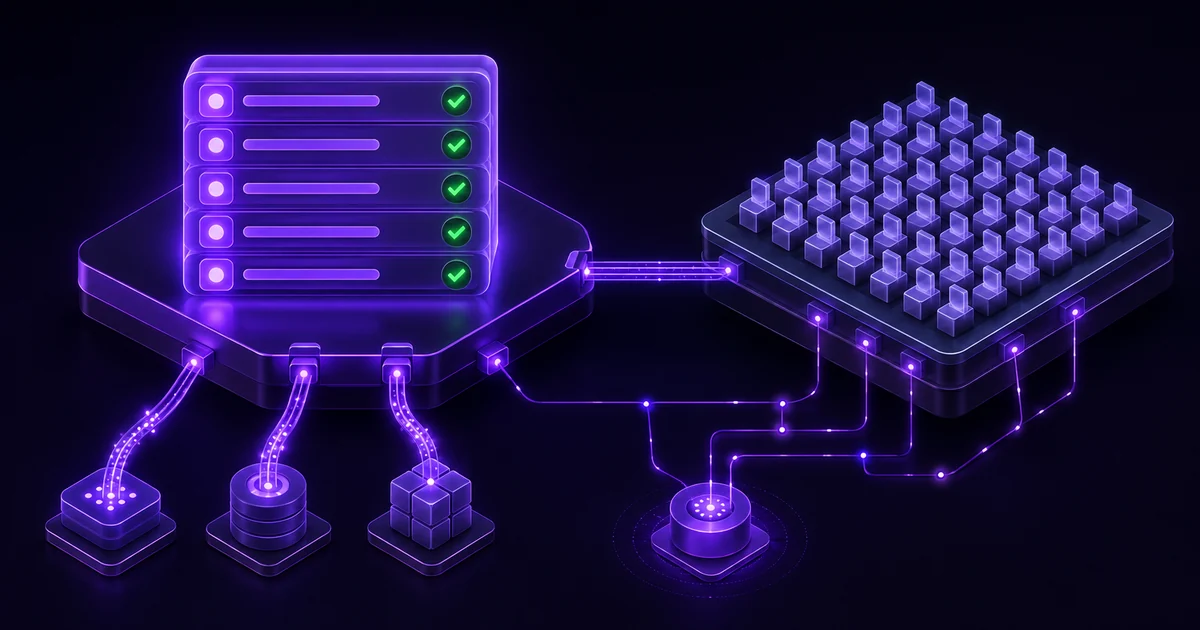
TestRail is the default choice for structured test management at scale, and it stays the right answer for teams that need its enterprise governance and its ecosystem. QAM Hub covers the same core ground, ingests automated results natively instead of leaving that to a script you maintain, and does not charge a full seat for people who only read reports. The practical split is this: TestRail manages test cases and expects your pipeline to feed it through the API; QAM Hub treats the automated run and the manual run as the same record, with traces, video and flaky-test history attached.
The takeaway in 30 seconds#
- TestRail Professional lists at $37 per seat per month on monthly billing, or $420 per user for twelve months on annual billing. Enterprise is $74 per seat per month, yearly billing only, which is exactly double (testrail.com/pricing, read 14 August 2026).
- Test case versioning, approvals, SSO, advanced auditing, cross-project reporting and daily backups sit on the Enterprise tier. Professional does not include them.
- TestRail has no viewer or read-only licence. A product manager who checks a release dashboard once a fortnight costs the same as a full-time tester.
- QAM Hub prices on two straightforward per-user plans, sold into the mid-market, with a project viewer role and no separate per-viewer charge. This page does not claim QAM Hub is cheaper at every headcount, because at the top of our range it is not.
- Both products ship AI. TestRail's runs on Sembi IQ, the shared AI platform behind TestRail, Xray and Testmo. QAM Hub's is built in and not credit-metered.
- Automation is the sharpest difference. QAM Hub takes Playwright and Cypress results through published reporters and anything else through a generic XML reporter, then keeps stability and flakiness history per case. TestRail receives results through its REST API, and that integration is yours to build and yours to keep working.
Facts verified on 14 August 2026. Pricing, plan contents and AI feature status were read from TestRail's own pricing page and support documentation on that date. Ratings come from G2 and Capterra with review counts and dates shown. We re-verify these pages quarterly and the date above changes only when the facts do. QAM Hub is built by QA Madness, who publish this site; competitor details reflect current public information and we do not accept payment for placement.
QAM Hub vs TestRail at a glance#
| QAM Hub | TestRail | |
|---|---|---|
| Product type | Standalone test management system, integrates with Jira and six other trackers | Standalone test management system, deepest integration surface in the category |
| Entry price (verified 14 Aug 2026) | Two per-user plans, mid-market. Figures published at commercial launch | Professional $37 per seat per month, or $420 per user for 12 months on annual billing |
| Upper tier | Second plan adds depth, not the basics. Versioning is on every plan | Enterprise $74 per seat per month, annual billing only. Exactly double Professional |
| What the price is billed on | Named user | Named active user. Cloud billing follows your maximum active user count, so exceeding your purchased tier adjusts the bill |
| Cost of read-only stakeholders | Project viewer role, no separate per-viewer charge | Full seat. No viewer or stakeholder licence exists |
| AI capabilities | Test case and checklist generation from a description or a screenshot, bug analysis, fix-test suggestions, retrospectives, and a Quality Analyzer that finds duplicate and vague cases | AI-generated test cases, AI-generated BDD scenarios, AI test automation and generation, and AI test prioritization released in TestRail 10.5 in June 2026 |
| How AI is billed | Included, not credit-metered | Bundled into the seat price on both plans |
| Automation ingest | Playwright and Cypress reporters published on npm, plus a generic XML reporter for anything else that emits XML | REST API. Community bindings exist; the integration is built and maintained by you |
| Failure artifacts | Traces, video and screenshots stored against the result | Attachments supported. No framework artifact pipeline of its own |
| Flaky detection and stability trend | Pass rate, stability score, flakiness rate and average duration over a 7 to 90 day window, plus quarantine for unreliable tests | No native flakiness analytics. Execution history from 7 to 180 days feeds AI test prioritization |
| Checklists | First-class checklist suites for release readiness and exploratory work | Not a native object |
| Two-way tracker integrations | Seven: Jira, GitHub Issues, GitLab, Asana, Linear, Redmine, Trello | Jira above all, plus the largest third-party ecosystem of any TMS |
| Customisation | Custom statuses, custom fields and custom field types. Version history keeps the last 20 revisions with rollback, on every plan | Custom fields and case templates on both plans. Test case versioning and approvals are Enterprise only |
| Migration path in | CSV import for cases, XML for automated results | CSV and XML import for cases. Runs and results are not supported by those importers |
What TestRail costs, and what the number leaves out#
TestRail's pricing page is one of the clearer ones in this category, and reading it carefully is still the fastest way to be surprised later. As of 14 August 2026 it lists Professional at $37 per seat per month on monthly billing, or $420 per user for twelve months, which works out at $35 a month. Enterprise is $74 per seat per month and is sold on yearly billing only, at $852 per user for twelve months. On-premise deployment starts at ten seats with a twelve-month minimum contract.
Three things sit behind that headline.
The first is the tier boundary. Test case version control and approvals, single sign-on, advanced auditing, test parameterization, project admin permissions and cross-project reporting are all Enterprise features. Versioning is the one that catches teams out. A test case is a document that changes for years, and knowing who changed a step and being able to roll it back is not an enterprise luxury. Paying double for it is a real decision, not a footnote.
The second is API and storage headroom. TestRail's own documentation puts the Cloud Professional API rate limit at 180 requests per minute, and Enterprise at 300. Storage on Professional is 50 GB. A suite that attaches screenshots and logs to results moves through that faster than teams expect, and the fix is the higher tier.
The third is the seat model. TestRail licences per named active user and has no reduced-price viewer role. Read-only access is a permission you configure, not a cheaper licence you buy. TestRail's billing documentation is explicit that Cloud subscriptions follow your maximum active user count, and that exceeding your purchased tier adjusts the bill accordingly. Deactivating a user later in the month does not undo that month.
A worked example at a realistic team shape#
Take a team of eight testers, plus twelve people who need visibility and never author or execute a case: a product manager, a support lead, three developers who look at what failed, an engineering director, and a handful of stakeholders on a regulated release. That is twenty licences, not eight.
| Scenario | Seats billed | TestRail Professional, annual list | TestRail Enterprise, annual list |
|---|---|---|---|
| Testers only | 8 | $3,360 per year | $6,816 per year |
| Testers plus 12 read-only stakeholders | 20 | $8,400 per year | $17,040 per year |
Figures use the published list prices of $420 and $852 per user per year read on 14 August 2026, before any volume discount, which TestRail does offer at larger brackets. The point of the table is the ratio rather than the absolute number: read-only access more than doubles the bill, and nothing about that is negotiable in the product, only in the contract.
What teams usually do instead is route around the licence. Someone exports results, tidies them in a spreadsheet and emails a summary before each release. That work is real, it is recurring, and it is invisible in the tool's cost. QAM Hub's answer is a project viewer role and a plan structure with no separate per-viewer charge, so the stakeholder reads the live report and nobody assembles a PDF by hand.
One honest caveat, because this page is meant to survive scrutiny: QAM Hub is not the cheapest option at every headcount. Our upper plan can land above TestRail Professional per seat. The saving, where it exists, comes from not paying for people who only read, and from not needing a second tool for automated results. If your team is eight testers and nobody else ever logs in, the per-seat comparison is much closer than the table above suggests. Our full dated pricing comparison across nine tools is in TestRail alternatives.
Where TestRail wins#
Three areas, and none of them is a throwaway.
The review base and the operational track record. TestRail holds 4.4 out of 5 across 612 reviews on G2 as of August 2026, and TestRail's own published figures in April 2026 recorded 4.4 across 611 G2 reviews and 4.3 across 176 Capterra reviews. No competitor in this category has that depth of feedback, and that matters when you are asking a procurement committee to approve a tool that will hold years of regulated evidence. QAM Hub is pre-commercial-launch and has no comparable review base. Saying otherwise would be dishonest.
Ecosystem and integration surface. TestRail has been in the market long enough that most CI systems, most automation frameworks and most reporting tools have a TestRail path already written. If you use something unusual, someone has probably connected it before you.
Enterprise governance. SSO through SAML, OAuth and OpenID Connect, audit logging, custom roles and user groups, IP allow lists, LDAP and Active Directory on Server, and a documented on-premise deployment option. For a bank or a medical device company, that list is the shortlist criterion and the rest of the comparison is secondary.
Where QAM Hub wins#
Automated results land in the same place as manual ones#
This is the difference that changes a working day. QAM Hub publishes reporters on npm for Playwright and Cypress, plus a generic XML reporter so any framework that emits XML can push results. Install the package, point it at your project with an API URL, a project ID and a token, and results arrive after each run with traces, video and screenshots attached to the result record. An automated test is linked back to its manual case through a TC-<number> prefix in the test title, and one automated test can cover several manual cases.
TestRail's route is the REST API. It works, it is documented, and teams run it at scale. It is also code you own: authentication, batching, retry on rate limits, and pagination. Bulk GET endpoints return a maximum of 250 records per response, and a script that reads the first page and stops will quietly report on the first 250 cases of a 4,000-case project. That failure is silent, which is the worst kind.
The second-order effect is where the cost actually sits. When automated results live in the CI tool and manual results live in the TMS, someone reconciles them before every release. That is the two-tool tax, and it is paid in the hours before a go/no-go call, by the person who can least afford the time.
Flakiness is a first-class record, not an anecdote#
QAM Hub's Test Explorer tracks pass rate, stability score, flakiness rate and average duration across a 7 to 90 day window, identifies regressions where a test passed last run and fails now, surfaces chronic failures, and lets an admin quarantine an unreliable test so it keeps running and recording without holding a build hostage. Detecting flakiness needs execution history across many runs, which is precisely what a single CI report cannot give you.
TestRail does not ship native flakiness analytics. Its AI test prioritization, released in TestRail 10.5, does read execution history over windows from 7 to 180 days to rank tests by risk, which is a related idea aimed at a different question: what to run first, rather than which test is lying to you.
Checklists exist as an object#
Column-based checklist suites cover release sign-off and exploratory sessions, where writing formal step-by-step cases costs more than it returns. Most of this category has no checklist object, so teams fake them with test cases, which then inflate the coverage numbers with things that were never really test cases.
Seven two-way tracker integrations#
Jira, GitHub Issues, GitLab, Asana, Linear, Redmine and Trello, all two-way, so a failed result creates a bug and the bug shows the failing case. Teams that are not on Jira are usually second-class citizens in this category. If your engineering org runs Linear and your support team runs Trello, that is a real constraint and it is worth checking on any shortlist.
AI agents can reach the data directly#
QAM Hub ships an MCP server that lets an assistant such as Claude read suites, cases and results and, with the right permissions, write them. It is available to QAM Hub users on request. Of eleven competitors we audited in July 2026, only two had a published MCP integration page at all. Sembi's VP of Product named agentic orchestration and MCP as a direction for the portfolio in June 2026, which suggests the category is moving here; as of this check TestRail has no published MCP server. Our own walkthrough is in connecting Claude to your TMS via MCP.
Customisation without a tier upgrade#
Custom statuses, custom fields and custom field types, plus version history that keeps the last 20 revisions of a case with rollback. Versioning is on every plan. That is the specific line where the two products diverge on principle rather than on price.
AI in both products, as of August 2026#
Both vendors shipped real AI in the last eighteen months, and the interesting question is no longer whether a tool has it but how it is billed and what it touches.
TestRail's pricing page lists AI-generated test cases, AI-generated BDD scenarios, and AI test automation and generation as available on both Professional and Enterprise. AI test prioritization was announced on 24 June 2026 as part of TestRail 10.5 and Xray 15.0, scoring tests on execution history, linked defects and semantic signals such as compliance or security labels, with a stated explanation for each ranking. Worth knowing when you read the plan comparison: that feature table still carried AI test prioritization as coming soon when we read it on 14 August 2026, after the release announcement. Vendor feature tables lag their own press releases, which is a good argument for checking the release notes rather than the pricing page.
One fact that a shortlist rarely surfaces. TestRail, Xray and Testmo are all Sembi brands, the portfolio Idera launched on 23 January 2025 alongside Ranorex, Kiuwan and PreEmptive, and their AI runs on a shared platform called Sembi IQ. A team moving from TestRail to Xray or Testmo to diversify is changing product, not vendor. That is not a criticism of any of the three, and there are good reasons to consolidate on one portfolio. It is information a buyer should have before they think they have three quotes from three companies.
QAM Hub's AI is built into both plans and is not credit-metered. It generates test cases and checklists from a description or a screenshot, analyses a failing test and proposes a fix, drafts retrospectives, and runs a Quality Analyzer that finds duplicate and vague cases and suggests rewrites. The design principle, which comes from QA Madness running QA services for a living, is that the agent proposes and a QA engineer decides. AI Agent Flows, which run tests autonomously, are rolling out soon and are not shipped today. A longer treatment of what these features actually do across the category is in AI test management tools.
Some context on why every vendor is shipping this at once. Sembi's 2026 Software Quality Pulse Report, a survey of 3,800 QA engineers, security professionals, developers and engineering leaders, estimates that 53 percent of organisational code is now AI-generated or AI-assisted, and that 61 percent of teams report moderate to dramatic increases in QA testing demand because of it. The same report found only 17 percent of engineering teams feel their testing has improved. The volume of code went up; confidence did not follow.
Migrating from TestRail to QAM Hub#
Plan for a working week for a mid-sized suite, and plan for one specific loss.
Test cases move cleanly. TestRail exports cases to CSV and XML, QAM Hub imports CSV, and the field mapping is mechanical work: title, preconditions, steps and expected results, priority, references, and whatever custom fields you added. Our step-by-step is in the KB article on importing and exporting test cases via CSV.
Execution history is the loss. TestRail's own documentation states that runs and results are not supported through its CSV, Excel or XML imports, and there is no UI export for runs at all. The only route out is the API: get_runs to enumerate the runs, then get_results_for_run for each one, paginating in blocks of 250 because that is the maximum the API returns per request. Teams discover this at the wrong moment, usually after they have already decided to move.
Two sane approaches. Either export history through the API to a warehouse or a CSV archive and keep the old instance read-only for a quarter, or accept the reset and start clean history on the new tool from a release boundary. The second is more common than vendors admit, and for teams whose reporting horizon is one quarter it costs nothing real.
We wrote the full route-by-route breakdown of what survives each export format in what you actually lose when you export test cases from TestRail, and the end-to-end process, including the field-mapping and clean-up stages, in how to migrate test cases into a test management system. Automated results do not migrate at all in any tool; you point the reporter at the new project and history restarts, which is why doing it at a release boundary is worth the wait.
When you should not switch at all#
Staying is the right call more often than a comparison page usually admits.
- You are on Enterprise and using it. Audit logs, SSO, IP allow lists, custom roles and on-premise deployment are a coherent package, and reassembling that elsewhere is a project rather than a purchase.
- Your integration work is done and stable. If the API glue has been running for two years and nobody thinks about it, the reconciliation cost this page describes is a cost you have already paid.
- Your suite is small and static. Under a few hundred cases with one or two testers, most of the differences here never surface. Sometimes the honest recommendation is to keep the spreadsheet a while longer, which we argue in test management vs spreadsheets.
- You are mid-audit or mid-certification. Moving the system of record during an audit window creates evidence gaps that are expensive to explain. Wait for the boundary.
If you are switching, switch for a reason you can name: read-only seat cost, the automation reconciliation, versioning locked behind a tier, or flakiness you cannot see. Switching because the interface feels dated tends to end with a new tool that feels dated in three years.
Ratings and how to read them#
TestRail holds 4.4 out of 5 from 612 reviews on G2 as of August 2026 and 4.3 out of 5 from 176 reviews on Capterra as recorded by TestRail in April 2026. Mid-market teams make up about half of its G2 reviewer base. Recurring criticism in those reviews clusters on price scaling, the absence of a viewer-only licence, and performance on large data sets.
QAM Hub has no third-party rating to quote. The product is pre-commercial-launch and built inside QA Madness, a QA outsourcing company of roughly 150 engineers, which means it has been used daily on client projects before it was sold to anyone. That is a different kind of evidence from 612 public reviews and we would rather state it plainly than dress it up.
Two honest limitations on our side. QAM Hub is newer, so the community around it is smaller than around a tool that has existed for over a decade. And it integrates with Jira without being Jira-native, so teams that want test cases to live as Jira issues will be happier with Xray or Zephyr Scale. The Jira question is worked through in test management tools for Jira.
Frequently asked questions#
Can you migrate from TestRail to QAM Hub without losing test results?#
Cases move without loss through CSV. Results do not, and that is a limit in the export rather than in the import. TestRail's documentation states that runs and results are not supported through CSV, Excel or XML imports, and no UI export for runs exists, so the only route is the API using get_runs followed by get_results_for_run, paginated 250 records at a time. Most teams archive that history and start clean history in the new tool at a release boundary.
Is QAM Hub cheaper than TestRail?#
Sometimes, and the honest answer depends on how many people only read. QAM Hub sells two per-user plans aimed at the mid-market with no separate per-viewer charge, so a team with eight testers and twelve stakeholders pays for eight kinds of access rather than twenty. On a team where everyone with a login also executes tests, the per-seat gap narrows and our upper plan can sit above TestRail Professional. Compare at your real headcount, counting the people who never author a case.
Does TestRail run automated tests?#
No, and neither does QAM Hub. Both are test management systems, not execution engines. Your framework runs the tests. The difference is what happens next: QAM Hub receives results through published Playwright and Cypress reporters or a generic XML reporter, while TestRail receives them through its REST API using an integration your team writes and maintains.
What does TestRail charge for read-only users?#
Full price. TestRail licences per named active user and offers no viewer or stakeholder tier, so a director who only opens a dashboard costs the same as a tester who lives in the tool. Read-only access is a permission setting rather than a cheaper licence, and Cloud billing follows your maximum active user count for the month.
Does TestRail have AI test case generation in 2026?#
Yes. TestRail's pricing page lists AI-generated test cases, AI-generated BDD scenarios, and AI test automation and generation on both Professional and Enterprise, with AI test prioritization released in TestRail 10.5 in June 2026. The AI runs on Sembi IQ, the shared platform behind TestRail, Xray and Testmo, and it is bundled into the seat price rather than metered separately.
Should you stay on TestRail?#
Stay if you are on Enterprise and using its governance features, if your API integration is built and stable, or if you are inside an audit window. Look elsewhere if you are paying full seats for people who only read reports, if someone reconciles automated and manual results by hand before every release, or if you need case versioning and do not want to pay double for it.
What is the difference between QAM Hub and TestRail for a small QA team?#
For a team under ten people, the differences that show up in the first month are automation ingest and versioning. QAM Hub gives you both on the entry plan, plus checklists for release sign-off. TestRail gives you a more mature reporting set and an ecosystem that has already solved most integration problems, with versioning on the higher tier. Small teams with no automation and no read-only stakeholders will find the two much closer than this page's headline suggests.
References#
- TestRail plans and pricing page, read 14 August 2026. Professional and Enterprise per-seat rates, annual equivalents, plan feature comparison, API rate limits and storage limits.
- TestRail Support Center, Introduction to the TestRail API. Bulk GET endpoints return a maximum of 250 records per request.
- TestRail Support Center, Results and Runs API reference. get_results_for_run and get_runs pagination behaviour.
- TestRail Support Center, Billing and Admin FAQ. Cloud billing follows maximum active user count for the period.
- TestRail Support Center, Managing user permissions and roles. Read-only access is configured through roles and project access.
- Sembi launch announcement, 23 January 2025. Portfolio brands including TestRail, Xray, Testmo, Ranorex, Kiuwan and PreEmptive.
- Sembi press release, 24 June 2026. AI Test Prioritization in TestRail 10.5 and Xray 15.0, powered by Sembi IQ.
- Sembi 2026 Software Quality Pulse Report, survey of 3,800 QA and engineering professionals. Figures on AI-generated code and QA demand.
- G2 product listing for TestRail, read August 2026. Rating 4.4 out of 5 across 612 reviews.
- TestRail blog, April 2026. Rating 4.4 out of 5 across 611 G2 reviews and 4.3 out of 5 across 176 Capterra reviews.
Continue with the rest of the set on the comparison hub, or read the wider field in best test management tools in 2026 and the head-to-head in TestRail vs Qase.